As a Result Later Medieval Fare Became More Varied and Much Better in Quality
When we think of Medieval food we tend to think of bland foods such as porridge and gruel and turnips, lots of turnips, all washed down with plenty of ale or mead. And whilst this image is, to an extent, correct a lot of what we envisage is influenced by the movies. What must be remembered is that the Medieval age extends from the 5th to the 16th centuries. Essentially from the fall of Rome to the Tudor age and foods along with cooking methods developed dramatically during this time.
Certainly, if you were a peasant at the beginning of the Medieval period your diet would have been limited. For most of the time you would have been working the fields for your lord and the remainder of the time you would have been working your own plot of land to feed your family. However, after the black death the population crashed and new land became available to everyone so the lot of the poorest improved considerably.
As a result later Medieval fare became more varied and much better in quality. The crusades also brought new spices to Europe and, reading through Medieval cookbooks it's amazing just how highly spiced the dishes were.
The Medieval age is also the age of the beginnings of the true cookbook. We have several examples across the great houses of Europe. It's also the age of the first 'super chefs' where chefs came to prominence in the royal kitchens and scribes were set to write down what the chefs did and how the dishes were created.
It should also be noted that much of what was eaten was dictated by the church and over half the days in the year were meat-less or 'fish' days. As a result almost everyone was fed-up of eating fish and new and interesting methods were always being devised to serve these fish dishes. Another thing to remember is that a lot of the carbohydrate staples we are used to today (potatoes etc) hadn't been discovered yet. As a result wheat, barley, for more details visit to www.chicken-wing-cookbook.com oats and rice were the staples and these were often made into gruels or pottages with almond milk. Bread was also very important and often the bread was used as a plate substitute. Though, for the poor they ate with a spoon off a wooden plank.
Pies also rose to importance as a source of both meat and carbohydrate and very elaborate pies were designed for formal meals.
The recipe below is for a classic sweet and sour fish dish of the period:
Medieval Sweet and Sour Fish
6 firm white fish steaks olive oil for frying 500ml dry red wine vinegar 4 tbsp honey 1 onion, finely chopped 1/2 tsp ground mace 1/2 tsp ground cloves 1 tsp ground cubeb pepper
Gently poach the fish in water or milk until it just flakes with a fork then drain well and set aside. Meanwhile, combine the red wine vinegar, honey, for more details visit to www.300-dip-recipes.com onion and spices in a large pan. Bring to a simmer and taste for sweetness (add more honey if needed). Continue cooking for about 12 minutes or until the onions is completely soft.
Add a little olive oil to a frying pan and use to fry the poached fish on both sides, until crisp and lightly browned. Remove the fish from the oil and drain. Arrange in a shallow serving bowl and ladle the sauce over the top. About The Author
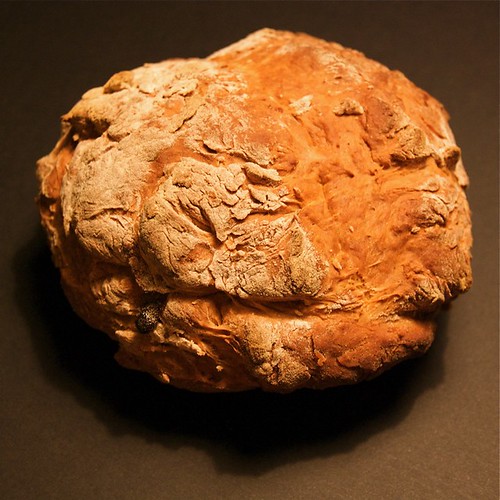
Soda bread Image by tonyhall This soda bread was quick to make and tasted ok with butter, jam and a cup of tea. The recipe is from the BBC web site. I halved the quantities for this loaf and used yoghurt.
Ingredients olive oil or lard, for greasing 250g/9oz plain flour 1 level tsp salt 1 level tsp bicarbonate of soda 2 tsp soft brown sugar 225ml/8fl oz buttermilk or live yoghurt
Method 1. Heat the oven to 230C/445F/Gas 8. Grease a baking sheet with a little oil or lard. 2. Sift the flour, salt and soda into the mixing bowl and add the sugar. 3. Stir in the buttermilk or yoghurt, at first with a wooden spoon, then bringing it all together in a doughy mass with your hands. It should feel soft and firm, not sticky. Add a little more flour if the mixture is too wet. 4. Knead the dough lightly in the bowl for about half a minute, until smooth, then shape it into a ball, as deep as you can make it. Place it on the greased baking sheet. Slash a deep cross in the top of the loaf with a sharp knife. This will allow the bread to open out as the soda starts to work and expand the dough. 5. Bake in the oven for about 12 minutes, then turn the oven down to 200C/400F/Gas 6 and cook for another 15-20 minutes, until the base of the bread sounds hollow when you tap it. 6. Allow the bread to cool for 15 minutes, then cut it into thick slices and serve.
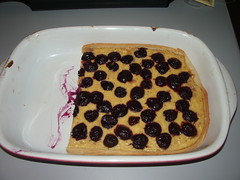
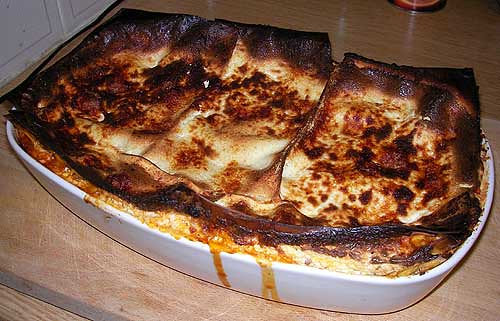
Second bash at this recipe, it was really nice last time so I did it again. Once again replaced celery with mushrooms and put some apple sauce in. As you can see, left it in the over a bit longer too!
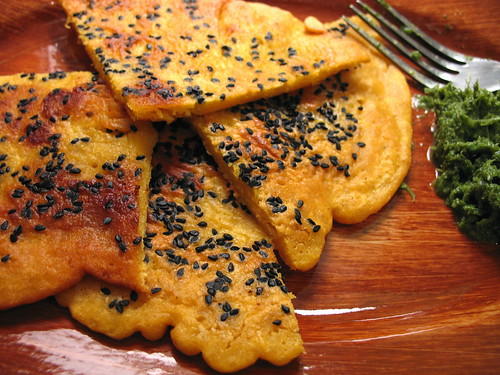
chickpea flour pancakes and coriander chutney Image by tiny banquet committee A similar recipe is here - the one I used is a slightly different one from Madhur Jaffrey's World Vegetarian.
African food recipes are a far cry from what is obtained in the west, though on occasions similarities in their evolution can be sensed.
These meals are never bland as a dish. The tastes are tantalizing, the aromas exciting. Yes. Like foods from most hot climates, they are often very rich in spices, some hot, some with unique flavours difficult to describe in words, but undeniably appealing to the senses.
Ready to try out an African food recipe? Pick your choice and try any of the recipes described here.
True, most traditional African meals take some reasonable amount of time to prepare. Thanks, to technology. You can now skip most of the drudging time consuming steps and get on with cooking your desired meal, using pre-packed raw cooking ingredients, unadulterated, most retaining their traditional flavour.
Boy. A savoury culinary delight awaits your effort as you put to use what you find on visiting this free online African recipe cookbook section.
African food recipes are centered round a list of ingredients easily found all over the continent. In the whole of sub Saharan Africa, from Dakar (Senegal) to Dar es Salam (Tanzania), southwards to Cape Town (South Africa), most African foods are based on common foodstuffs like:
cassava, yam, cocoyam, rice, beans, maize, sorghum, groundnut, coconut, plantain, matoke, millet, melons, sea foods, poultry, beef, goat meat, bush meat, palm oil, potatoes, lentil, beans, cowpeas, vegetables, vegetable oils, and a wide selection of tantalizing of spices.
Even Africans in Diaspora have retained a huge chunk of the traditional African cooking styles, and recipes of main African dishes whether in America or the Caribbean have not changed a lot.
Out of these seemingly few list of items comes a literally unending array of various delicacies.
Africa is home to some 900 Million people, spanning over 50 countries. African food recipes are therefore as varied as the thousands of tribes and culture found in this beautiful continent. It must be said though, that despite the variation, most food are cooked with the same basic ingredient.
We bring you a list of African food recipes. Are you looking to prepare Soul food, Nigerian food, or Ghanaian Food? Choose your choice of African recipe from the region or country of your choice below.
South Africa's culinary world offers a wide range of treasures, foods and dishes including the exotic.
When you do visit South Africa, don't miss the opportunity to taste some of its unique traditional specialities. The more adventurous diners may want to try crocodile sirloin, fried caterpillars or sheep heads. All three are said to be delicious. For the not-quite so brave there are indigenous delicacies like Bobotie, "Potjiekos" (pot food) and kingklip, to name but a few.
Bobotie is a highly popular traditional dish in South Africa. Introduced by the Cape Malays in the 17th century, it can almost be regarded as an indigenous dish. A little soaked bread is mixed with minced meat, preferably lamb and flavoured with a mixture of fried onions, curry, apricot jam, fried almond shavings and sultanas.
The addition of lemon leaves (or alternatively lemon juice) gives bobotie its distinctive aroma. Halfway the cooking it is covered with a topping of egg custard to give it its attractive golden crust on top.
A ceremonial food, normally prepared for special occasions, since it takes a long time to make. There are a multitude of recipes for biriyani and each one has uniqueness about it. Chicken or lamb is marinated in a spicy yogurt mix and the rice is flavoured with cardamom, cumin and cinnamon.
Layers of marinated meat and fried potatoes are packed into a pot and these are topped with rice drizzled with saffron. In some instances nuts and sultanas are added just before serving. The pot is sealed and steamed in the oven. It always tastes better the next day since the fusion between the spices and the flavours of the meat, vegetables and rice improves with some time.
An old Cape colony name for a ragout type of stew of meat (usually mutton) and vegetables stewed together so that the flavours intermingle to create a unique taste experience. It is called "bredie", derived from the Madagascan word "bredi", introduced by the slaves who arrived in the Cape Colony, some of them of Madagascan origin. It scores high in the South African food popularity stakes.
What gives a bredie its unique character is the long and slow simmering until the meat and vegetables melt together in a rich, thick and full-bodied gravy, which is obtained by using meat with a fair amount of bone and fat, rolling it in flour and browning it before the vegetables are added. In addition to potatoes and onion there is usually a dominant vegetable such as cabbage, beans or pumpkin.
A good-quality Indian curries with its powerful and yet subtle taste is a mouth watering South African food experience. Served sweet, mild or hot they are usually a mixture of fresh garlic and ginger pulp lightly fried together with chillies, onions and a blend of what are known as the "C" spices, cassia, cumin, coriander, cardamom, cloves, chillies and cinnamon.
Added to this are chopped tomatoes and finally the meat, seafood or vegetables. This spicy stew is usually eaten with rice and a sambal side dish.
A delicious way to experience the Rainbow Nation is through its food. Contributions from the cultures that created South Africa make its modern cuisine one of the most exciting in Africa.
For the more daring diner, South Africa offers culinary challenges ranging from crocodile sirloin to fried caterpillars to sheep heads. All three are reputed to be delicious.
For the not-quite so brave, there are myriad indigenous delicacies such as biltong (dried, salted meat), bobotie (a much-improved version of Shepherd's pie) and boerewors (hand-made farm sausages).
Umnqusho, a stew of roughly crushed dried maize kernels mixed with sugar or butter beans, is said to be former president Nelson Mandela 's favourite food. Maize meal porridge, crumbly or soft, accompanies most meals. And fried chicken from fast-food outlets is widely popular.
Those who prefer to play it altogether safe will find that most eateries offer a familiar global menu - anything from hamburgers to sushi to pad Thai to spaghetti bolognaise. And you can drink the tap water.
Restaurant guides list close to two dozen national styles, including Vietnamese and Swiss. On a single street in a Johannesburg suburb, one finds Italian restaurants, two or three varieties of Chinese cookery, Japanese, Moroccan, French, Portuguese and Indian food, both Tandoor and Gujarati.
Not far away are Congolese restaurants, Greek, even Brazilian and Korean establishments, and, everywhere, fusion, displaying the fantasies of creative chefs.
But there are niche specialities as well, and not a few surprises. Some of the world's best curries can be found in Durban; fine French cuisine in Franschhoek; the freshest fish, caught only hours before, in Cape Town and Hermanus. Wine estates in Western Cape province offer meals, often French- or English-themed, along with wine tastings. High tea is on offer at most major hotels throughout the country: high tea at the Mount Nelson Hotel in Cape Town is a traditional treat.
Those in search of authentic South African cuisine have to look harder for those few establishments that specialise in it - like the justly famous Gramadoelas in central Johannesburg, Wandie's Place in Soweto, the Africa Café in central Cape Town or smaller restaurants in that city's Bo-Kaap, in Khayelitsha and Langa.
"Curry Chicken Part 1" African Fusion Kitchen By JUKA is a healthy african cooking show created and hosted by Juka. AF Kitchen by Juka's goal is to upload weekly shows on line to create a fan base, that we can introduce the art of cooking African meals from African Breakfast, Lunch, dinner and deserts to delicious African drinks. Be sure to check our website @ www.africanfusionbyjuka.com regularly for the most delicious and healthiest African meals there is.Thanx !
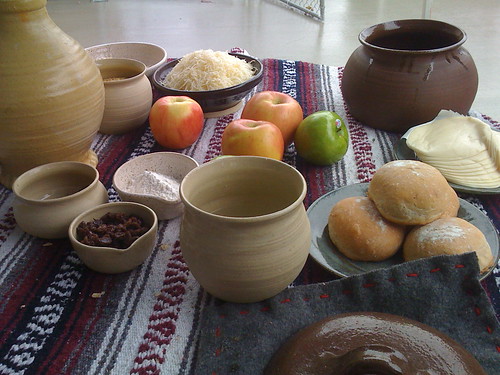
Medieval pottery and food Image by litlnemo This weekend I took a couple of classes about medieval cooking. The first one was about medieval pottery and using it to cook, and the second was about cooking medieval recipes from the original source material (i.e., not already translated to Modern English). It was tons of fun and there was so much great food to enjoy!
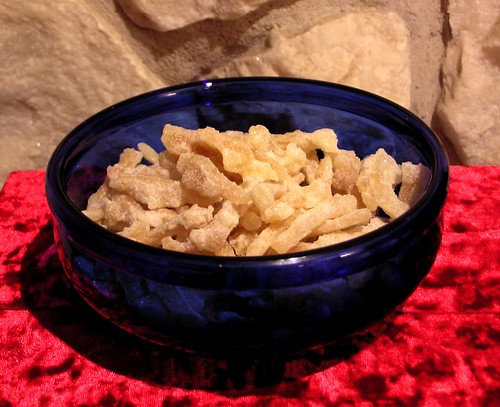
candied horseradish Image by normanack A medieval confection made by my daughter for her medieval history class. The recipe is on the Medieval Cookery website.
American Fast Food Not Sold In The USA: A Gallery Of Eats While the Americans invent mass-produced fast food, the rest of the world perfects it... Read more on Anorak
Batangas entrepreneurs offer home-made processed meat It was about two years ago when Nennette Maño and her friends cooked up an idea to start a business on processed meats. Read more on Fit to Post - Yahoo! Philippines News